Marketing
How dealerships can improve vehicle imaging

- By Phyron
- May 5, 2026 - 1 min read

Studies show that 95% of car buyers research online before visiting a dealership, spending an average of 14 hours doing so. Most form a strong opinion about a vehicle long before they pick up the phone or walk into your showroom, and that opinion is shaped almost entirely by imagery.
Which means your vehicle imaging is not just a marketing detail; it is one of the most important commercial decisions your dealership makes.
The problem is that most dealerships treat it like an afterthought, leading to inconsistent backgrounds, missing angles, poor lighting, poor brand alignment and little to no video. The result is listings that fail to build confidence and buyers who quietly move on to your competitor's listing two rows down.
In this article, we uncover the most common vehicle imaging mistakes dealerships make, what great imaging actually looks like, and how modern tools you can use to make it easier than ever to get it right.
Contents
Why vehicle imaging is what drives dealership sales today
The car-buying journey has shifted dramatically online. Research from Google shows that car buyers interact with an average of 24 touchpoints before purchasing, with the majority of those interactions happening digitally. For most buyers, the first real interaction with a vehicle is a set of photos on a marketplace listing, and that moment matters more than most dealerships realise.
Listings with high-quality images consistently outperform those without because car-buyers are more likely to engage with well-merchandised vehicles on sale. 40% of consumers are likely to purchase a vehicle based on images they view online without seeing the vehicle in person.
On any given marketplace page, your listing sits directly next to your competitors'. Buyers are making split-second comparisons. If your images look low-effort or inconsistent, your competitors with better vehicle imagery do not need to do anything to win that click; you hand it to them.
Poor imaging also creates a trust gap as buyers associate image quality with care and perception of quality at your dealership. A blurry photo or a cluttered forecourt background does not just look bad. It raises doubts about the vehicle itself and the services you offer.
Every car buyer wants to feel like they can see the car properly. Your vehicle must be presented in clean, well-lit images from multiple angles, with an interior that gives a genuine sense of the space, and no distractions in the background. They want to feel informed, not uncertain and knowing this can help you avoid the following vehicle imaging problems dealers run into, see details below.
Common vehicle imaging mistakes dealerships make
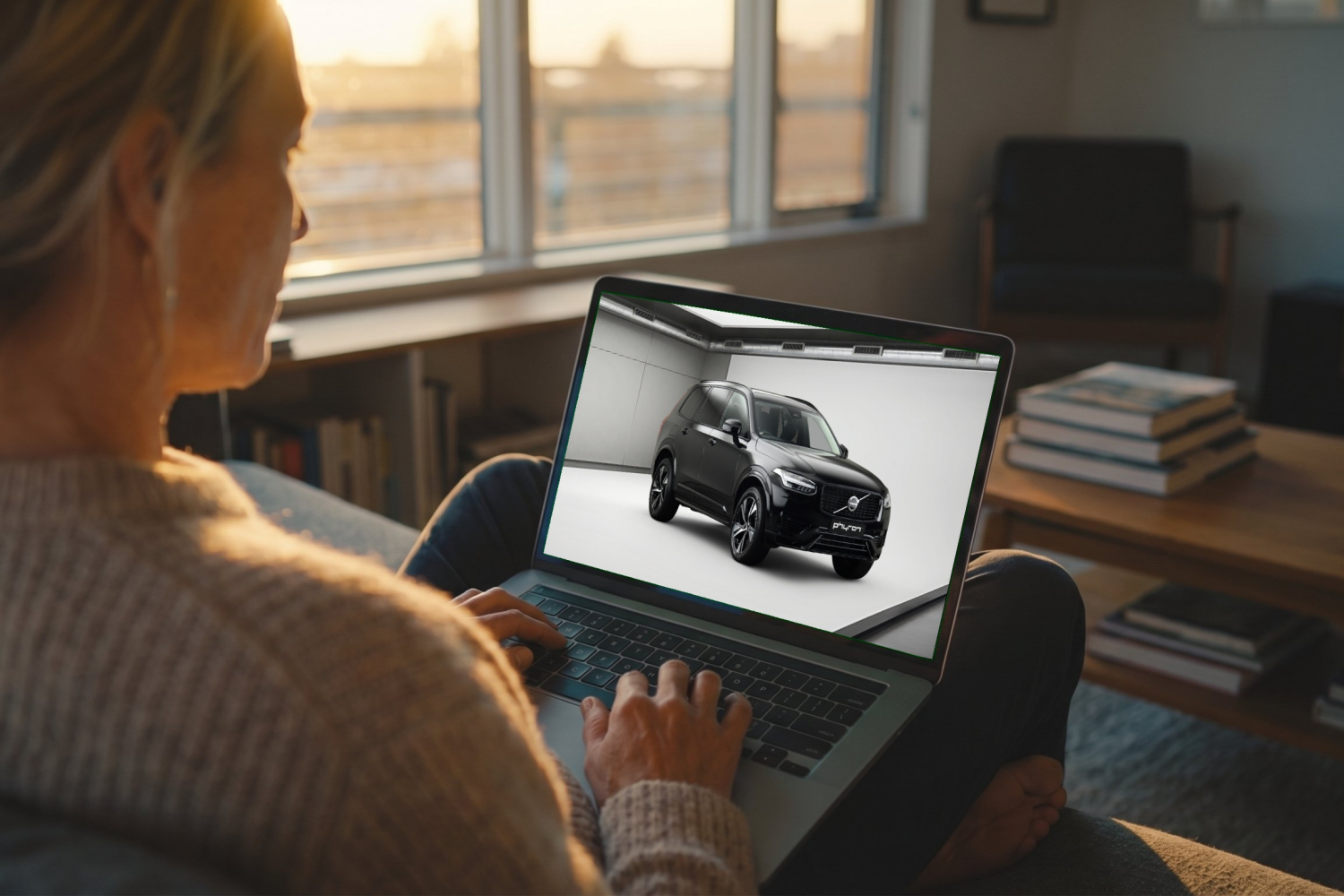
Most dealerships know their imaging could be better. Few have a clear picture of exactly what is going wrong. Below are some of the patterns we see most often.
- Inconsistent backgrounds: Cluttered forecourts, varying locations, mixed lighting conditions, and vehicles photographed at different times of day. Individually, these feel like small issues. Across an inventory of 200 vehicles, they add up to a visual mess that undermines your brand at every listing.
- Missing vehicle angles: Most buyers expect a minimum set of shots: front, rear, both sides, three-quarter view, dashboard, seats, and boot. When images are missing, buyers fill in the gaps with doubt. A missing interior shot does not read as an oversight. It reads as something to hide.
- Low resolution and poor lighting: Dark, blurry, or low-quality images signal low effort. Buyers notice, even if they cannot articulate why. A vehicle that would look great in person can be made to look tired and uninviting by bad photography.
- Zero standardisation across stock: When imaging quality varies from vehicle to vehicle, it creates an inconsistent experience that weakens your overall brand perception. Buyers do not just evaluate individual listings; they form an impression of your dealership as a whole.
- No video: Static images alone no longer meet buyer expectations. Video is now the dominant format on platforms like Meta Automotive Inventory Ads and TikTok. Dealerships that rely on stills only are missing one of the highest-engagement formats available to them.
It's important to note that your Vehicle Detail Page (VDP) performance can be a direct reflection of imaging quality. Poor image quality harms your sales funnel: it results in shorter time on page, lower click-through rates, and fewer enquiries. Ultimately, this means your inventory sits unsold for longer.
What great vehicle imaging actually looks like

For the most part, good vehicle imaging practices are not as complicated as most dealers might think. It is consistent, intentional, and built around what buyers actually need to feel confident about every vehicle in your inventory. Let's look at what this means for your dealership.
- Clean and consistent backgrounds: Neutral or branded backdrops that remove visual distractions and put the vehicle front and centre. Every vehicle in your inventory should feel like it belongs to the same professional standard.
- Standardised shot list: Agree on a minimum set of required angles and stick to it across every vehicle. Exterior shots should include the front, rear, driver and passenger sides, and both three-quarter views. Interior shots should cover the dashboard, front seats, rear seats, and boot.
- Lighting that works: Natural light on an overcast day is often the most forgiving option for outdoor photography. For indoor shoots, soft, diffused lighting that avoids harsh shadows or reflections on the bodywork makes a significant difference. The goal is an accurate, attractive representation, not a sales brochure.
- Brand consistency: Your colours, framing, and presentation style should be recognisable across every listing. Buyers who encounter your inventory across multiple platforms should have a consistent experience of your brand.
- Video as standard: Every listing should include a video, but it does not need to be a costly production shoot. A short, well-structured video that shows the vehicle clearly from multiple angles gives buyers the confidence they need and performs significantly better on social and marketplace channels.
To ensure consistency, you can create an imaging checklist that, before any vehicle goes live, runs through the following: clean background, minimum exterior angles covered, minimum interior angles covered, consistent lighting, no visible distractions, resolution suitable for full-screen viewing, and video included.

Create unique imagining and video from existing content in minutes
Book your Phyron demoHow technology is raising the imaging standard for dealers

The good news for dealerships is that producing great vehicle imaging at scale has become far more achievable. Technology is removing the barriers that used to make it expensive and time-consuming.
- Background removal at scale: Tools built specifically for automotive photography can take your forecourt shots and replace the background with a clean, branded alternative. No turntable photography or studio required. What used to take a professional shoot and hours of post-production can now happen automatically across your entire inventory.
- Automated video from stills: With automated vehicle imaging platforms like Phyron's Inventory Video solution, turn your existing stock photos into fully branded video listings, automatically. When a new vehicle arrives, a video goes live within minutes. When it sells, the video comes down. The entire process runs without manual input
- Inventory-wide consistency: For a dealership with 100 or more vehicles, manually maintaining consistent, high-quality imaging can become unrealistic. Automated tools make it possible to apply the same visual standard across every unit in your stock, updated in real time as inventory changes.
Dealers like Ken Garff Automotive, using these tools, are seeing real commercial results: higher click-through rates, lower cost-per-lead on paid social video ads, and faster time to sale on vehicles that previously sat on their forecourt.

In conclusion, your vehicle imaging is not a cosmetic detail. It is a commercial decision that can directly affect how many buyers enquire, how quickly vehicles sell, and what your dealership's brand communicates at every touchpoint with buyers.
The standard for vehicle imagery is rising, and buyers are more discerning than ever. The platforms where they discover vehicles are increasingly rewarding high-quality visual content, and dealerships that treat imaging as an afterthought will find it harder to compete. However, those who get it right will convert more browsers into buyers at a lower cost and with less effort.
Phyron helps dealerships automatically produce professional, consistent vehicle imaging across their entire inventory. From Enhanced Stills that transform forecourt photography into polished listings to Inventory Videos, it's time to raise your vehicle imaging standard at scale.
Try it on your inventory

Engage and attract more buyers
Book a free Phyron demoMore in Marketing

Sep 10, 2026
Digital merchandising for car dealerships: How to reach more buyers
Discover how an AI car photo editor helps dealerships enhance vehicle photos, reduce editing time, standardize inventory presentation, and sell cars faster.

Jun 17, 2026
How an AI car photo editor helps you sell cars faster
Discover how an AI car photo editor helps dealerships enhance vehicle photos, reduce editing time, standardize inventory presentation, and sell cars faster.

Jun 17, 2026
Car photography techniques every dealership should use
See the car photography techniques dealerships use to create consistent inventory photos, improve vehicle listings, and standardize every photoshoot.