Every vehicle listing competes for the same thing: a buyer's attention.
Within seconds, shoppers decide whether to keep exploring or move on to another vehicle. They haven't spoken to a salesperson yet, nor have they visited your dealership. Everything they know comes from what's on the screen.
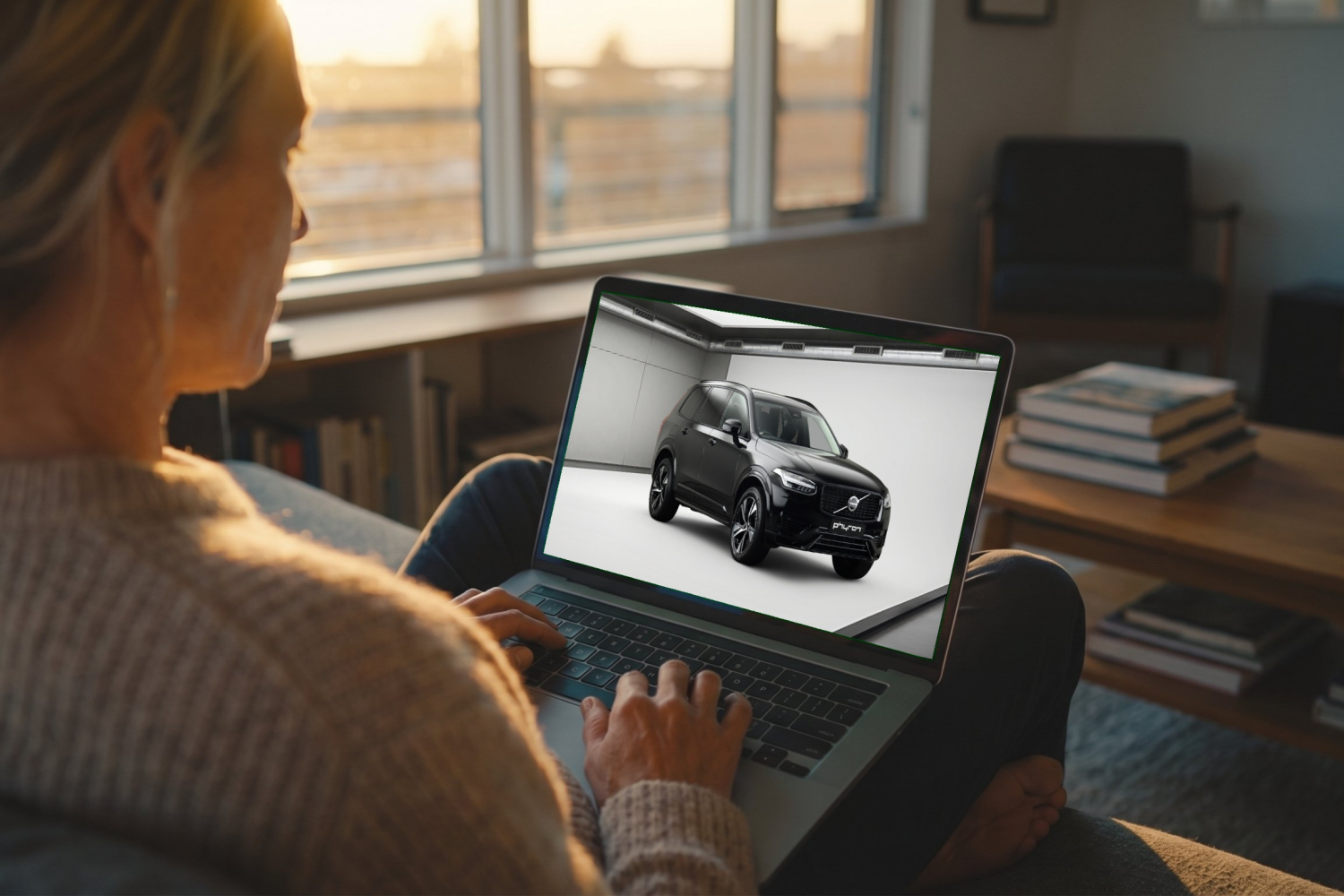
That's why a vehicle listing deserves far more attention than simply uploading photos and specifications. It acts as your digital showroom and salesperson all at once.
According to Kelley Blue Book, 90% of shoppers prefer actual photos of the vehicle they're considering over stock imagery.
Video has become just as important. Google found that 69% of people who used YouTube while buying a car said it influenced their purchase decision more than TV, newspapers, or magazines.
As buyer expectations evolve, high-converting vehicle listings need to make it easy for shoppers to understand and trust a vehicle before they ever contact the dealership. This guide explains how to do that, so you can build vehicle listings that generate more engagement and, ultimately, more sales.
Marketing
How to create high-converting vehicle listings

- By Phyron
- Jul 28, 2026


What is a high-converting vehicle listing?
A vehicle listing is the page buyers use to evaluate a vehicle before deciding whether to contact a dealership. On most dealership websites, this is called a Vehicle Detail Page (VDP).
A high-converting vehicle listing gives buyers enough confidence to take the next step. That next step might be requesting more information, booking a test drive, applying for finance, or simply spending longer exploring the vehicle.
Every listing exists to answer one question: "Do I have enough information to move forward?"
The dealerships that consistently generate more inquiries aren't always publishing more listings. They're publishing listings that answer buyer questions quickly and remove uncertainty.
Today's buyers rarely rely on a single website before making a decision. Buyers visit an average of 4.6 websites during their research, including dealership websites and marketplaces. Every unanswered question can create an opportunity for them to compare another vehicle at a different dealership. High-converting vehicle listings reduce the reasons to keep searching.

Turn your inventory into ads that really stop the scroll.
Get a free demoThe five questions every high-converting vehicle listing answers
Every buyer arrives with a different budget and reason for shopping. What they all have in common is uncertainty.
Before contacting a dealership, buyers are trying to build confidence that they've found the right vehicle. Every high-converting vehicle listing helps them answer five questions.
These questions provide a useful framework for evaluating any Vehicle Detail Page, regardless of the brand or price point.
1. Can I trust this vehicle?
Trust is established before buyers read a single sentence. The first few seconds are spent scanning the listing:
✔ What would I want to know before inquiring?
✔ What concerns might I have?
✔ What details would influence my decision?
Small details influence whether buyers continue exploring or return to their search results.
Real vehicle photography plays a major role here. Buyers expect to see the actual vehicle they're considering, not stock images or heavily edited photos that create unrealistic expectations. Honest presentation helps shoppers feel more confident about what they'll find if they visit the dealership.
74% of shoppers are more likely to visit a dealership when listings feature photos of the actual vehicle rather than stock photography. Authentic imagery helps establish trust before a buyer ever reaches out.
Consistency matters too. When every vehicle listing follows the same presentation standard (lighting, angles, consistent background), buyers begin to trust the dealership as much as they do the individual vehicle. A polished experience across your inventory signals professionalism and attention to detail.
Video seals the deal
Photography creates the first impression, but video helps buyers build confidence.
Instead of piecing together information from dozens of static images, shoppers can watch the vehicle being presented in seconds. They can see how it looks from every angle, understand its key features, and get a much clearer sense of its condition before visiting the dealership.
That matters because buying a car isn't just a rational decision. People want to feel confident they're making the right choice. Video helps bridge the gap between browsing online and seeing the vehicle in person by giving buyers a richer, more complete understanding of what they're considering.

2. Is this the right vehicle for me?
Once buyers trust a listing, they begin looking for reasons to keep considering the vehicle. Specifications help, but they rarely answer the questions buyers actually care about.
A parent may immediately look for rear-seat space and safety features. Someone buying their first EV may want reassurance about charging and battery range. A contractor shopping for a pickup is likely thinking about payload or towing capacity long before they notice the infotainment system.
High-converting vehicle listings make those details easy to find.
Descriptions should explain why a feature matters, not simply confirm that it exists. Service history, ownership details, warranties, and optional equipment all help buyers understand whether a vehicle fits their needs.
Think about the questions a buyer would ask if they were standing next to the vehicle in your showroom. The strongest vehicle listings answer as many of those questions as possible before a salesperson becomes involved.
The faster someone can answer that question for themselves, the more likely they are to continue toward an inquiry instead of opening another listing.
3. How does this compare to other vehicles?
Most buyers don't evaluate a vehicle listing on its own. They compare it against several alternatives before deciding which dealership to contact.
That comparison happens quickly.
Buyers jump between tabs, looking at similar vehicles with similar prices. They're trying to understand which one offers the most value, which dealership feels the most trustworthy, and which listing gives them the fewest unanswered questions.
A high-converting vehicle listing makes those comparisons easy.
Pricing should be transparent. Vehicle specifications should be complete. Important features should be easy to find instead of buried halfway through a description. If a vehicle has a recent service history, premium trim package, or manufacturer warranty, buyers shouldn't have to search for it.
Consistency also matters at this stage. When every listing follows the same structure, buyers spend less time figuring out where information is located and more time evaluating the vehicle itself.
The easier it is to compare your inventory, the easier it becomes for buyers to make a decision.

4. Can I picture myself owning it?
By this point, buyers usually know whether a vehicle meets their practical requirements. Now they're asking a different question: Can I actually see myself owning this car?
This is where great vehicle listings stand apart. Buyers want to move beyond comparing specifications and start imagining how the vehicle fits into their daily lives. They want to picture themselves behind the wheel, see what the cabin feels like, and understand how the vehicle looks from every angle before making the effort to visit a dealership.
Richer content helps make that possible. Video brings the vehicle to life in a way static images alone can't, allowing buyers to experience the vehicle as a whole rather than piecing together information from individual photos.
When Jan Nygaard introduced Phyron's automated Inventory Videos alongside AI-powered image enhancement, the dealership reduced image production time from three weeks to less than one day.
Video listings on Denmark's largest automotive marketplace also generated 31% more website clicks and 8% more direct leads, showing how richer vehicle content can keep buyers engaged throughout their buying journey.

5. Is it easy to take the next step?
Even the strongest vehicle listing can lose buyers if taking the next step feels difficult.
By the time someone reaches the bottom of a Vehicle Detail Page or watches a video ad, they shouldn't be wondering how to contact the dealership or request more information. Every action should feel obvious.
That starts with the basics. Contact information should be easy to find, inquiry forms should be short, and important actions like booking a test drive or requesting finance shouldn't compete for attention.
The experience also needs to work on mobile.
Google found that 53% of mobile visitors abandon a page that takes longer than three seconds to load, making performance just as important as the information on the page. A slow-loading page, confusing layout, or difficult form creates friction at the exact moment a buyer is ready to act.
Every unnecessary click gives someone another opportunity to leave.
Common reasons vehicle listings don't convert

Some listings fail because they lack information. Others fail because the information is difficult to use, or the images and video are low quality.
Here are problems that appear repeatedly across dealership websites.
Listings without videos
Today's buyers are used to consuming information through video. A listing without one asks shoppers to piece together the story themselves by clicking through image after image.
Video makes it easier to understand a vehicle quickly and helps buyers picture themselves owning it before they ever visit your dealership.
The impact on performance is well documented. When Lipscomb Cars introduced Phyron's automated Inventory Videos, the dealership saw 125% more inquiries, 25% more transactions, and a 40% increase in transactional value in just three months.
That’s the power of video.
Publishing incomplete listings
A vehicle shouldn't go live with placeholder text, missing photos, or incomplete specifications.
Every unanswered question creates another reason for buyers to continue their search elsewhere.
Making buyers work too hard
If someone has to call the dealership just to find out whether a vehicle has Apple CarPlay or adaptive cruise control, the listing isn't doing its job.
The strongest vehicle listings answer common questions before buyers need to ask them.

Focusing on selling instead of helping
Many descriptions try to persuade before they've informed.
Buyers rarely respond to exaggerated language or generic marketing claims. They respond to listings that make it easier to evaluate the vehicle honestly and confidently.
Helping buyers make a decision is usually more effective than trying to convince them.
Treating every listing differently
A dealership's inventory should feel connected.
When one listing includes twenty-five high-quality photos, another has eight poorly lit images, and a third follows a completely different format, buyers begin to question the overall quality of the dealership.
Consistency builds trust long before a salesperson joins the conversation.
Quick vehicle listing checklist

Conclusion
Improving a vehicle listing doesn't always require a complete redesign. Sometimes the biggest gains come from giving buyers the information they need in a format that's easy to understand, whether that's clearer descriptions, better photography, or video that brings the vehicle to life.
The strongest vehicle listings answer questions and make it easy for buyers to picture themselves behind the wheel before they ever visit your dealership.
When every listing does that consistently, more shoppers stay engaged, and every vehicle has a better chance of finding its next owner.
Ready to create higher-converting vehicle listings?
Phyron helps dealerships automate vehicle merchandising with AI-powered photography, inventory videos, and image enhancement, making it easier to publish consistent, high-quality vehicle listings at scale.
Book a free demo to see how dealerships are reducing time-to-market, increasing engagement, and creating vehicle listings that convert more buyers into inquiries.

Download our Paid Ads guide to see how good vehicle listings can pay off
Download the guideMore in Marketing

Nov 5, 2026
Google vehicle ads: The complete guide for car dealers in 2026
Google vehicle ads explained: setup, image rules, where they’re available and how dealers avoid rejected ads.

Oct 8, 2026
9 ways to run an efficient car photoshoot
Make dealership car photoshoots more efficient with practical ways to reduce delays, streamline vehicle photography, and get inventory online faster.

Sep 24, 2026
The best car photo backgrounds for dealership listings
Find the best car photo backgrounds for dealership listings and learn how to create consistent vehicle imagery at scale.