Most dealerships already have an automotive merchandising process. Photos get taken. Listings go live. Vehicles get pushed to marketplaces and social channels.
But very few have a true merchandising system.
65% of buyers now make first contact with a dealership digitally. Your listings are doing the job your sales team used to do. The question is how to do it well.
This guide breaks down what automotive merchandising really means, and how leading dealerships are using AI to scale listings, video, descriptions, and advertising without scaling headcount.
Marketing
Your guide to automotive merchandising

- By Phyron
- Jun 17, 2026


What is automotive merchandising?
Automotive merchandising is the process of presenting vehicles online in a way that helps buyers discover, compare, trust, and ultimately purchase them across every digital channel they use during the buying journey.
That includes:
✔ Photography
✔ Vehicle descriptions
✔ Pricing presentation
✔ Inventory videos
✔ Marketplace listings
✔ Paid social advertising
✔ Inventory feed syndication
✔ Listing consistency across channels
In other words, vehicle merchandising is everything that shapes how a buyer experiences your inventory before they ever speak to your dealership.
Traditionally, merchandising was physical. Dealers focused on showroom layout, signage, windscreen stickers, and showroom presentation.
Digital merchandising is the modern equivalent. Today, 75% of car buyers visit a third-party marketplace before contacting a dealership.
Your listing is now your showroom. Your Vehicle Detail Page (VDP) is your salesperson. And automotive merchandising is the discipline of making sure both are working as hard as possible, on every vehicle, every day.
It’s a connected system.

Turn your inventory into ads that really stop the scroll.
Get a free demoWhy merchandising is a major revenue driver
Margins are tighter than they used to be. Average gross profit per used vehicle in the US fell by nearly 16% in 2024, while buyers have more choice and more information than ever before.
That means every vehicle needs to start working harder from the moment it goes live.
One of the biggest challenges is speed. A vehicle that is waiting for photos, descriptions, approvals, or listing updates is a vehicle that buyers cannot discover. Delays between acquisition and publication can slow inquiries, reduce visibility, and extend the path to sale.
Consistency is another common issue. Many dealerships still reserve their best merchandising for premium inventory or newly arrived stock. The hero vehicles get video. The fresh arrivals get attention. Older stock often gets left behind.
The retailers pulling ahead are operating differently. They focus on creating a consistent merchandising standard across their entire inventory and reducing the time it takes to get vehicles live across every channel.
When buyers are comparing dozens of similar vehicles online, presentation becomes a competitive advantage.
The five components of a modern merchandising system
Good automotive merchandising relies on five connected components working together. So when one part breaks down, the entire system underperforms.
1. Photography
Everything starts with photos. Photography feeds every downstream merchandising asset you create:
✔ Your Vehicle Display Page (VDP)
✔ Marketplace listings
✔ Inventory videos
✔ Paid ads
✔ Social creative
Good input creates good output everywhere else, and buyers notice immediately.
90% of shoppers prefer real lot photos over stock imagery, and buyers who see actual vehicle photography are 53% more likely to purchase. They can usually tell when a dealership is using generic imagery or when photos are rushed, inconsistent, badly framed, or incomplete. Consistency matters as much as quality.
The dealerships performing best online typically follow the same workflow across every vehicle:
✔ The same shot order
✔ The same framing
✔ The same lighting standard
✔ The same presentation style
The challenge, of course, is scale. That’s why more retailers are moving toward AI-guided photography systems that standardize capture, automate enhancement, and remove manual bottlenecks from the process.
The Phyron App is designed specifically for this. Anyone on your staff can capture consistent inventory imagery in under five minutes, without specialist photography training and without a hired professional.
Danish BMW and MINI retailer Jan Nygaard previously relied on a professional photographer and external editing, resulting in a three-week delay between vehicle arrival and publication. After bringing photography and editing in-house with Phyron, the team reduced time to market from three weeks to less than a day while cutting image production costs by more than 88%.
For dealerships managing large inventories, that combination of speed, consistency, and cost efficiency can have a significant effect on merchandising performance across the entire operation.
2. Vehicle descriptions
If photography is the most discussed part of merchandising, descriptions are usually the most neglected. Many listings still rely on generic spec-sheet copy, empty description fields, and repeated boilerplate text across dozens of vehicles.
Buyers typically want context. Why is this vehicle worth considering? What stands out about it? What condition is it in? Why is it priced the way it is?
At the same time, Google doesn't explicitly reward VIN-level content. What it does reward is unique, useful information.
Duplicate descriptions can limit visibility, while generic copy often weakens relevance signals. Listings that provide meaningful vehicle-specific details are more likely to perform well in both search results and buyer engagement.
A strong vehicle description should:
✔ Lead with the strongest selling point
✔ Sound specific to the actual vehicle
✔ Reinforce value
✔ Build confidence
✔ Help buyers picture ownership
Importantly, the headline already covers make and model. The description should add something new.
The operational challenge is that writing high-quality, VIN-specific descriptions manually for hundreds of vehicles is difficult to sustain consistently at scale. That’s why more dealerships are starting to explore AI-assisted copy workflows as part of modern automotive merchandising.
At scale, even small reductions in manual work can have a major operational impact.
3. Pricing presentation

Today’s buyers arrive informed. More than half of US buyers now consider three or more brands during the purchasing process, and 70% switch brands entirely during their research journey.
That means “Call for price” listings or vague pricing information often create friction rather than curiosity. Buyers simply move on to the next listing that gives them the information they need immediately.
A strong pricing presentation is about providing context. Why is this vehicle priced this way?
✔ Market positioning
✔ Mileage
✔ Condition
✔ Features
✔ Recent price reductions
✔ Finance availability
Buyers who understand value are more likely to inquire confidently. The dealerships that present pricing transparently tend to generate stronger trust signals from the very beginning of the buying journey.
4. Video
While photos show a vehicle, video presents it.
Video is what comes closest to recreating the physical showroom experience for buyers researching remotely. Cars.com's recent pilot showed that VIN-specific AI video drove a 47% increase in influenced vehicle sales compared to periods without video coverage.
Why? Video helps buyers understand a vehicle more quickly than static imagery alone.
It helps buyers:
✔ Understand proportions
✔ Experience features
✔ Feel more connected to the vehicle
✔ Spend longer engaging with listings
Platforms like Meta and TikTok now support VIN-level video creative directly from inventory feeds.
That means the same merchandising asset improving your listing can also power your advertising automatically. So one piece of content can target multiple channels. It’s continuous visibility.
The issue then becomes producing video consistently across every vehicle without overwhelming internal teams. That’s where merchandising systems either hold together or collapse.
Phyron Inventory Videos are designed specifically to solve that scalability problem by automatically transforming inventory photos and data into branded video assets for every VIN.
5. Feed syndication and channel consistency
This is the component many dealerships only think about when something breaks, but is often the difference between scalable merchandising and operational chaos.
Because even if you have great photography and high-quality video, with strong descriptions and effective pricing, you still lose trust if:
✔ Marketplace listings show incorrect pricing
✔ Vehicles are missing photos
✔ Sold cars remain live
✔ Inventory updates lag across channels
Modern buyers move across platforms constantly. They expect consistency everywhere. Manual updates across multiple platforms inevitably create delays and inconsistencies at scale. That’s why live inventory feed syndication has become foundational to modern merchandising.
A single connected feed pushes:
✔ Inventory changes
✔ Pricing updates
✔ New arrivals
✔ Sold removals
✔ Creative assets
across every connected platform automatically.
It is not the flashiest part of merchandising, but it is what allows everything else to operate consistently in real time. And it is the structural layer modern AI merchandising platforms are built around.
How to scale automotive merchandising without expanding headcount
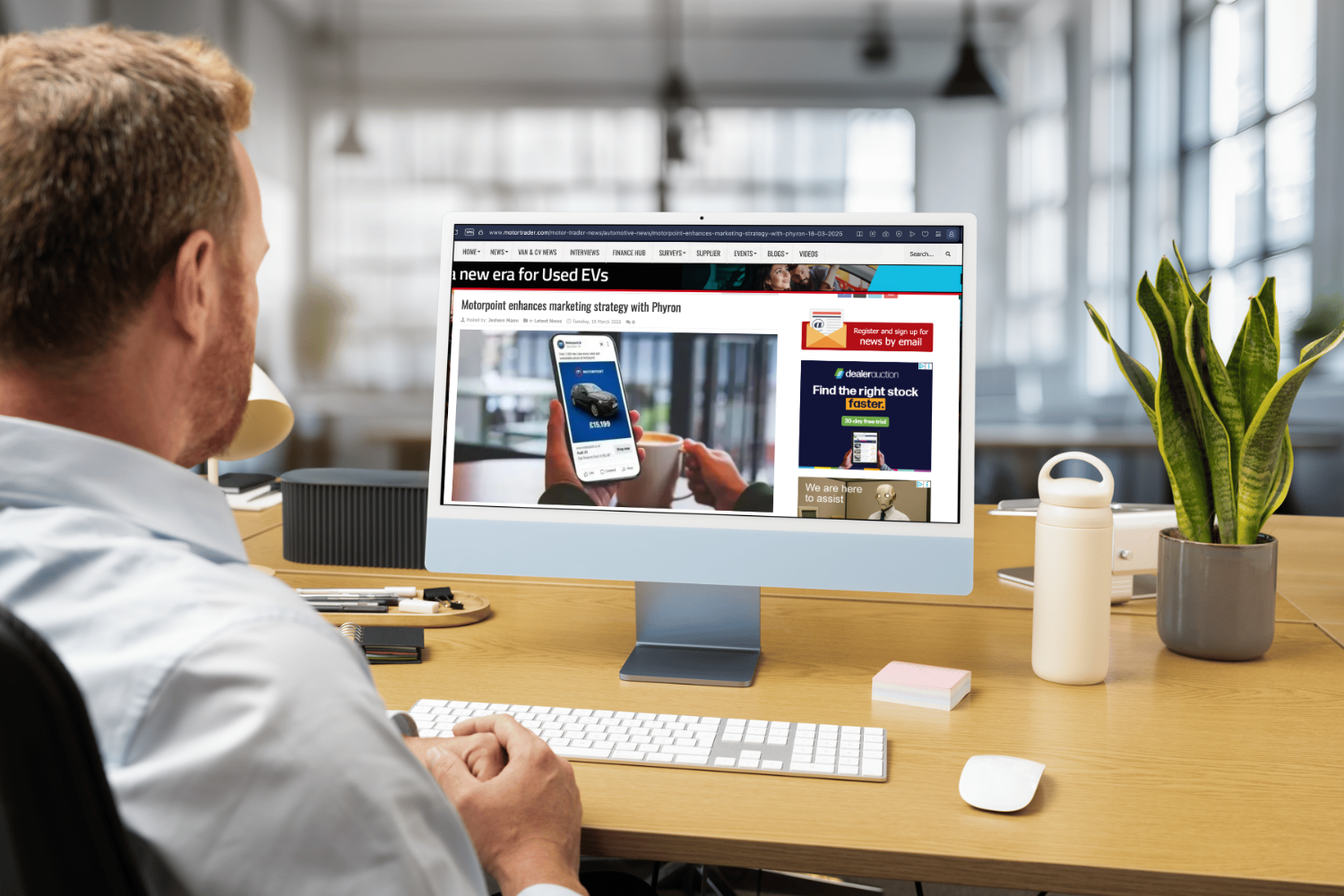
Building a merchandising system is straightforward in principle. Running it across hundreds of vehicles, across multiple channels, without it becoming a second job for your team—that's where it gets hard.
But the market is moving. 52% of franchise dealers already use AI to engage customers around the clock, and 63% say investing in AI now is critical for long-term competitiveness.
The dealers who automated their merchandising pipeline early are the ones now running consistent video coverage across their full inventory, live listings across every channel, and ad creative that updates automatically.
Here’s what that looks like when it’s running properly:
✔ Connect your DMS or live inventory feed once
✔ Photos are captured via the Phyron App and enhanced to listing-ready quality
✔ Inventory Videos are generated automatically from existing assets
✔ Descriptions are drafted from specification data and reviewed
✔ Listings automatically syndicate across websites, marketplaces, and paid channels simultaneously
✔ Sold units come down automatically; new arrivals go live within minutes
Renault Renew went from manually recording individual videos to over 3,100 active video listings in a single month using Phyron. Year-on-year, used vehicle inquiries rose 20.5% and transactions increased 29.5%. The output improved while the manual workload dropped dramatically.
You do not need to rebuild your entire merchandising process overnight. The most effective approach is usually to strengthen your system in stages.
Step 1: Standardize the basics
Start by auditing your existing listings. Remove stock photography where possible, fill missing descriptions, check pricing consistency across channels, and establish a clear internal standard for listing readiness.
Introducing an internal SLA where every frontline-ready vehicle is merchandised within 24 hours helps reduce delays between acquisition and buyer visibility.
Step 2: Introduce video strategically
Begin with:
✔ High-value vehicles
✔ Slow-moving inventory
✔ Competitive segments
Add video to those listings first and measure the impact on:
✔ Time on page
✔ Engagement
✔ Lead volume
✔ Marketplace performance
For most dealerships, the performance difference becomes visible quickly.
Step 3: Automate the workflow
It’s time to remove repetitive manual work from the process entirely. Manual processes do not survive growth.
Platforms that automate photo enhancement, video creation, description generation, and feed syndication are an operational necessity for stores managing large inventory volumes.
Conclusion
Automotive merchandising is a competition for attention. Buyers compare dozens of vehicles before making contact, and every merchandising element either builds confidence or creates friction.
The buyers are already online. The channels are already there. And the tools now exist to turn your entire inventory into compelling digital experiences without adding headcount to do it.
That's what modern automotive merchandising looks like. And for the dealerships building that system today, the opportunity is wide open.
With Phyron, we help automotive retailers turn every vehicle into a consistent, high-performing digital listing automatically.
Book a free demo.

Push your merchandising with the power of paid social ads in our guide
Download the guideMore in Marketing

Sep 10, 2026
Digital merchandising for car dealerships: How to reach more buyers
Discover how an AI car photo editor helps dealerships enhance vehicle photos, reduce editing time, standardize inventory presentation, and sell cars faster.

Jun 17, 2026
How an AI car photo editor helps you sell cars faster
Discover how an AI car photo editor helps dealerships enhance vehicle photos, reduce editing time, standardize inventory presentation, and sell cars faster.

Jun 17, 2026
Car photography techniques every dealership should use
See the car photography techniques dealerships use to create consistent inventory photos, improve vehicle listings, and standardize every photoshoot.