You run a busy dealership. Photographing a car is only one part of getting it online during your hectic day. Vehicles need to be prepared and moved into position before you can even capture and process images. And then the finished assets need to reach the listing, where those same images can also be used to create video content for each vehicle.
Multiply that across dozens of vehicles, and small delays can quickly create a backlog.
A more efficient car photoshoot helps dealerships get through inventory faster while maintaining a consistent standard across every listing. The key is understanding where time is being lost across the process and finding practical ways to reduce it.
In this guide, we'll look at how dealerships can make car photoshoots more efficient at scale.
For advice specifically on lighting, equipment, angles, and composition, head to our complete guide to car photography.
Marketing
9 ways to run an efficient car photoshoot

- By Phyron
- Oct 8, 2026

Contents

What is an efficient car photoshoot?
An efficient car photoshoot is a repeatable, timed workflow that takes a vehicle from preparation through to publish-ready imagery in the shortest possible time, without sacrificing presentation quality.
So how do you manage one? Let’s dig into it.

Turn your inventory into ads that really stop the scroll.
Get a free demo1. Work backward from how many cars you need to photograph
Before scheduling a car photoshoot, start with the volume of inventory that needs to get online.
If 30 vehicles are waiting to be photographed, the process needs to account for all 30. Estimate how long your current photoshoot takes per vehicle and use that to understand how much capacity you actually have.
Most dealerships still spend 10–20 minutes manually photographing a single car—and that's before accounting for preparation, vehicle movement, and post-shoot processing.
Example: If it takes you 15 minutes per vehicle, you can photograph around four cars an hour. Bring the average down to eight minutes, and that same hour could cover seven cars.
This becomes particularly important when new stock arrives faster than your team can photograph it. A growing queue means vehicles are sitting ready for sale without the imagery they need to be properly marketed online.
Set a realistic daily target based on your inventory volume, then track how your team performs against it. Focus on photography tips to streamline the process for best results. If you're consistently falling behind, you can start looking at where time is being lost rather than simply asking staff to work through vehicles faster.
2. Have the next vehicle ready before the current photoshoot finishes
A surprising amount of photoshoot time can disappear between vehicles.
Once one car is finished, the photographer shouldn't have to start searching the lot for the next vehicle or wait for it to be cleaned. When this happens repeatedly throughout the day, downtime can add up quickly.
Instead, create a queue of vehicles that are ready to photograph. Keys should be accessible, and each car should have completed any necessary preparation before reaching the photography stage.
For higher-volume dealerships, it may also make sense to separate vehicle preparation from photography. While one car is being photographed, the next can be made ready to go.
This keeps inventory moving through the photoshoot and lets the person behind the camera spend more time actually capturing vehicles.

3. Find where your car photoshoot is actually losing time
Look at the full journey a vehicle takes before its images appear online. Ask yourself:
✔ How long does it spend waiting to be cleaned?
✔ Is someone regularly searching for keys?
✔ Does the photographer have to move vehicles across the site?
✔ What happens to the images once the shoot is finished?
Mapping that process can reveal delays that are easy to miss during a busy day. Five minutes waiting for a vehicle might not feel significant, but repeated across 20 cars, that's more than an hour lost before photography is even considered.
Once you know where those delays occur, you can focus on fixing the parts of the workflow that will make the biggest difference.
4. Batch similar tasks to keep inventory moving
If the same person prepares a vehicle, photographs it, processes the images, and publishes the listing before starting the next car, they can lose a lot of time switching between tasks.
Where your team size allows, group parts of the process together. Several vehicles can be prepared ahead of a photography session, while completed images can be processed together afterward. The same principle applies to video. If your vehicle photos can be repurposed into inventory videos, there's no need to schedule a separate video shoot for every car.
This gives the photographer a clear block of time to work through the waiting inventory.
The right setup will depend on the size of your dealership and how responsibilities are divided. A smaller retailer may still have one person handling most of the process, while a larger group can assign different stages to different team members.
The aim is to reduce the stop-start nature of the photoshoot so vehicles spend less time waiting between stages.
5. Stop waiting for perfect photoshoot conditions
Waiting for the ideal background, an empty photo bay, or better weather can quickly slow down how fast inventory gets online. Set clear minimum standards for where and when vehicles can be photographed so staff know when a shoot can go ahead.
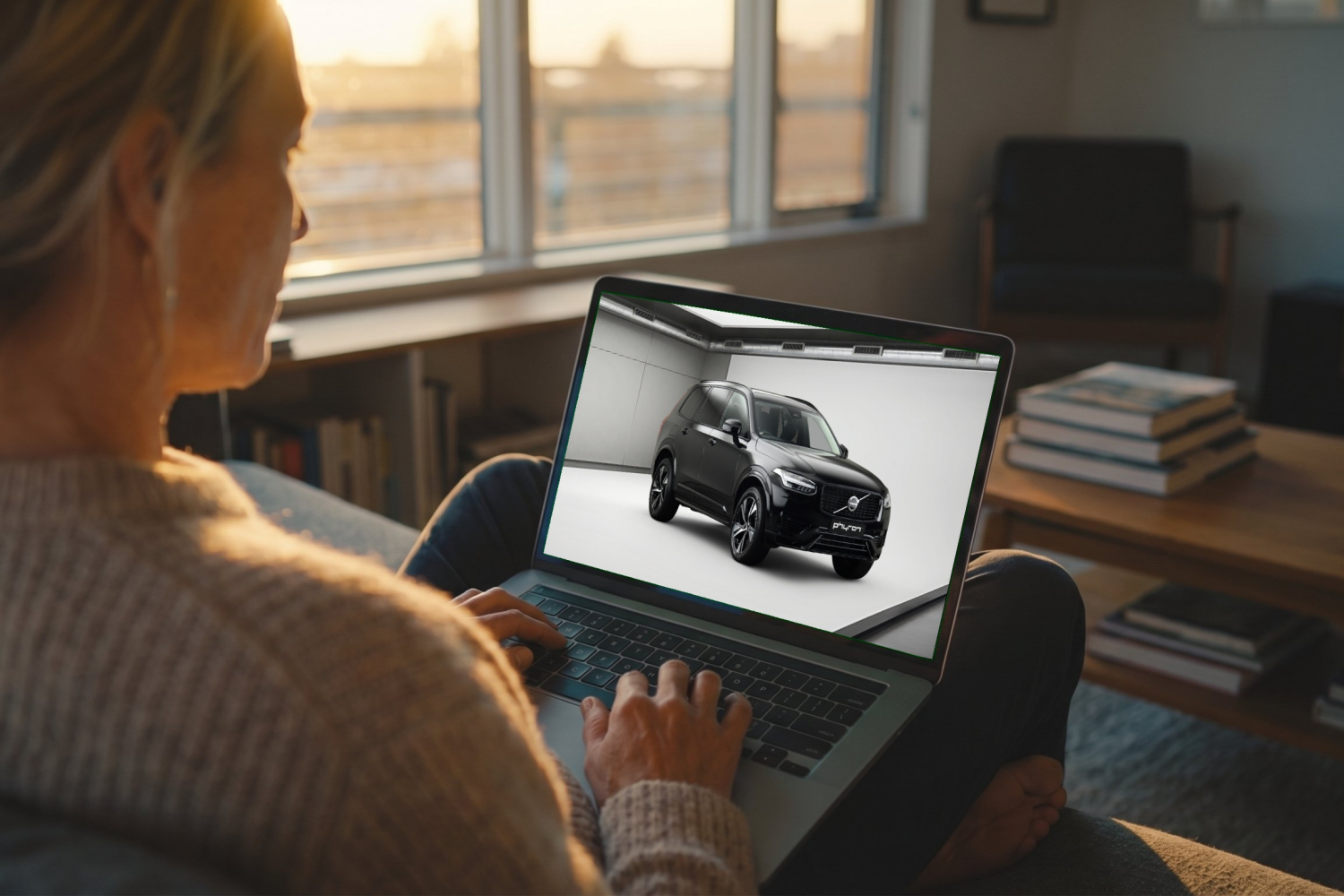
Technology can also give dealerships more flexibility here. AI image tools can replace distracting backgrounds and standardize the final presentation after the photo is taken. This means teams can spend less time moving vehicles around the dealership or waiting for a particular shooting location to become available.

6. Calculate the real-time cost per vehicle
Start measuring from the point a vehicle is ready for photography and stop when its visual content is ready to use online. If those images also feed into video, include that in the workflow rather than treating video production as a separate process. This captures the time spent moving the vehicle, waiting between stages, and processing the finished photos.
You may find that an eight-minute car photoshoot takes much longer once you include everything around it. That gives you a much more useful baseline for improving the process.
Track the average across several vehicles rather than relying on one particularly quick or difficult shoot. From there, you can see whether changes to your workflow are actually reducing the time it takes to get inventory ready for buyers.
This also connects photography efficiency to a much more commercially important metric: Time to Market. CDK Global data shows it costs dealers up to $50 for every day a vehicle isn't properly merchandised online—making photoshoot delays a direct and recurring cost on every vehicle that isn't live.
Every unnecessary delay between a vehicle arriving and its listing going live is time that stock isn't being fully marketed to potential buyers.
7. Automate the work that happens after the photoshoot
Once the photos are taken, a lot of work can still happen between the camera and the live listing. Images may need editing, backgrounds cleaned up or replaced, and assets prepared for use across different channels.
This is where automation can meaningfully improve the overall efficiency of a car photoshoot.
"A dealership shouldn't have to create every piece of content from scratch. Once you've captured good images of a vehicle, you've already done the hard part—everything after that is really just decisions about where those images go and what form they take.
That's the shift we built Phyron around. The same photoshoot becomes your Inventory Video, your Enhanced Stills, ad creative that updates itself the moment the price changes, a personalized clip for the one buyer who's been circling that exact trim for a week. None of that is separate content. It's the same asset, routed differently."
- Jens-Peter Sjöberg, Chief Innovation Officer, Phyron
With tools like the Phyron App and Enhanced Stills, dealerships can capture vehicle imagery on a smartphone and automatically turn those photos into standardized, ready-to-use assets. The same imagery can also feed into Inventory Videos without requiring another shoot.
This lets dealerships focus on capturing accurate vehicle imagery while more processing happens automatically in the background.

8. Build a car photoshoot process that scales
The real test of an efficient process is whether it still works when inventory volumes increase.
Lipscomb, a UK dealer group representing several automotive brands, faced this challenge when manual content production began taking up too much of its team's time. Background editing alone could add 24–48 hours to the process of getting vehicle imagery ready.
After introducing the Phyron App alongside automated Inventory Videos, Lipscomb estimated that the new workflow saved its team 30–40% of their time. Instead of that time simply disappearing into the next manual task, the marketing team could put more of it into improving its inventory.
As Group Marketing Manager Louise Stevens explained:
“This improvement has given us more time to focus on capturing quality imagery and video and has also freed up resources to conduct more detailed analytics and optimization of our used car stock.”
9. Measure whether your car photoshoot is becoming more efficient
Once you've made changes to the process, track whether they're actually saving time.
Start with a baseline for your current workflow and monitor a small number of practical metrics, such as:
✔ Vehicles photographed per day
✔ Total employee time per vehicle
✔ Time from vehicle-ready to listing-ready
✔ Reshoot rate
The numbers don't need to match an industry benchmark to be useful. What's more important is whether your own performance improves over time.
Frequently asked questions
How long should a car photoshoot take at a dealership?
A well-run car photoshoot should take five to ten minutes per vehicle once a standardized process is in place. Most dealerships currently average 10–20 minutes when preparation, vehicle movement, and processing are included.
What is a good time-to-market target for vehicle photography?
Industry best practice is to have a frontline-ready vehicle fully merchandised and live online within 24 hours of arriving in stock. Every day a vehicle sits offline without imagery is a day it cannot generate inquiries. CDK Global data puts that cost at up to $50 per vehicle per day.
How can I speed up vehicle photography at my dealership?
The biggest gains usually come from outside the photoshoot itself. Having vehicles ready before photography begins, reducing downtime between cars, and automating post-shoot processing like background replacement and image publishing with AI.
A faster car photoshoot starts with a better process
Strong digital merchandising helps dealerships get vehicles online quickly, keep them current, and create engaging content at scale. With AI and automation, richer formats like video can become a consistent part of that process without adding more manual work.
Want to make video a scalable part of your digital merchandising strategy? Book a demo with Phyron to see what that could look like across your inventory.

Want the next step in merchandising?
Download the paid social ads guideMore in Marketing

Nov 5, 2026
Google vehicle ads: The complete guide for car dealers in 2026
Google vehicle ads explained: setup, image rules, where they’re available and how dealers avoid rejected ads.

Oct 8, 2026
9 ways to run an efficient car photoshoot
Make dealership car photoshoots more efficient with practical ways to reduce delays, streamline vehicle photography, and get inventory online faster.

Sep 24, 2026
The best car photo backgrounds for dealership listings
Find the best car photo backgrounds for dealership listings and learn how to create consistent vehicle imagery at scale.